Showing posts with label squash. Show all posts

Wednesday, November 28, 2012

squash court


I came into possession of some gorgeous poblano peppers, which have been looking mighty fine in the market even as all the produce around them begins to show signs of jet lag.  So I set out to make my friend Julie's "Three Sisters and One Spicy Brother" squash soup, which is some mighty soup, but when I unearthed the recipe in my bin of scraps and magazines, I found I lacked a few of the things required to produce it.  The principle missing ingredient was time: one of the sisters is white beans, and I did not have time to soak and cook them.  There was no big, looming deadline, really--I just wanted this soup for dinner. 

Right behind her recipe in the bin was an old squash soup of mine that was pretty tasty, as I recall.  But sitting there on the counter next to Julie's recipe and the peppers, it started to take notions into its head.  A hybrid version resulted.

I've made it a couple of times now, because the poblanos continue to wink and sparkle at me as I troll the store wishing it were still summertime (only from a produce standpoint), and each time I forget how I did it the time before and still end up with something that makes the consumers pretty happy, so my net opinion is that you cannot go very far wrong combining these ingredients. If you are curious, the main difference is that sometimes I leave the bulb end of the squash whole and roast it, and then mash it, and sometimes I dice the whole squash and cook half of it with the aromatics in the soup pot, and then puree it all together with my trusty stick blender.  No obvious difference is apparent.  I gave you the half and half method below, because it spares you peeling and chopping the peskier bulb end while it is raw, but it's your call.

There's some grunt work involved.  Can't lie about that.  

Butchering a butternut squash is aerobic work, and you have to get a pan and the oven involved.


And there are the peppers to roast, and otherwise attend to.


Plus some mincing around, and further chances to practice your knife skills.


But once all the prep work is done, the soup itself comes together in a snap. 

And then you get to eat it.


two sisters and one spicy brother soup

2 or 3 poblano peppers
1 large butternut squash
3T olive oil, divided
1 large onion, finely chopped
3 cloves of garlic, minced
1" of fresh ginger, peeled and finely chopped (not too fine)
2-3t ground cumin
3/4 t salt
1 chipotle pepper in adobo sauce (see note), finely minced
10 oz frozen corn kernels
1 c chopped fresh cilantro, or basil as an alternative

Roast the poblano peppers over a gas burner flame or under the broiler until well charred all over.  Plop them into a small bowl and cover it, so the trapped steam can loosen the skin for you.  Once they are cool enough to handle, do the messy work of slipping their peels off, seeding them, and chopping them up into a quarter-inch dice.  Try to resist the urge to rinse them, as they lose roastiness when you do. Stray bits of charred peel won't harm the end result. You can do this a day or two in advance if you like.

Heat the oven to 425.  Line a baking sheet with parchment paper and also grab a medium baking dish. Hack the bulb end of the squash off the neck end.  Stand the bulb end on its cut side, halve it, and scrape out the seeds. Place the bulb ends, cut side down, into the baking dish with a little water and slide it into the oven while you continue to wrestle the rest of the squash into submission.

Slice off the stem end and stand the neck section up on the cutting board.  Slice vertically from stem to stern, into half-inch slices, and then go about peeling those and chopping them into cubes that will fit nicely in your soup spoon.  Toss them with a tablespoon of oil, and spread on the baking sheet. Roast the cubes about 25 minutes, until just golden and tender.  Keep the bulb ends in there all this while, and when they slump a bit, they are ready to come out, too.  Set all of this aside to cool.

Heat the remaining oil in a large, heavy pot.  Saute the onion until it begins to soften and lightly brown, then add the garlic, ginger, salt, cumin and chipotle and keep cooking until it is all nicely fragrant, about another minute.

Now scrape the cooked flesh from the bulby parts of the squash into the pot, and thoroughly mash it around with your spoon until it is pretty smooth.  Add about 6 cups of water, the roasted squash cubes and the corn, and mix everything very well. Bring it to a simmer, and let it cook for about ten minutes.  Stir in the cilantro, and taste for salt and heat.

The promised NOTE on the chipotle peppers: little cans of these are sold in the Latin or Spanish section of most every grocery store.  I buy a can about every six months, dump the contents of the can into a small tub, jar or freezer bag, and use it as I need it.


Friday, October 5, 2012

de-bunk mates

Has that Stanford study been bothering you?  I mean the one that "established" that organic broccoli was no better for you than a Snickers bar--or so the media seems to have taken it.  If it has been bothering you, filling you with a mute rage or an intense yet unspecific irritation, please read Mark Bittman's excellent article on the subject. 

In it, he quotes a woman named Susan Clark of the Columbia Foundation, who says, “The researchers started with a narrow set of assumptions and arrived at entirely predictable conclusions. Stanford should be ashamed of the lack of expertise about food and farming among the researchers, a low level of academic rigor in the study, its biased conclusions, and lack of transparency about the industry ties of the major researchers on the study.  Normally we busy people would simply ignore another useless academic study, but this study was so aggressively spun by the PR masters that it requires a response.”

Are you not pounding the desk in triumphant agreement?  My poor desk.  I engaged in the same type of aerobic agreement when my daughter, listening to the post-debate analysis this week, said, "it sounds like they are talking about the Olympics--'He kind of turned out on the landing on that one move'--instead of the two potential future presidents of the country."  She was right, of course--what we want to hear is 'HE WAS LYING!  HE WAS LYING!' and instead we get, 'when he was lying about the economy, he really sounded presidential; on his lie about international policy, he could have lied with more vigor so the point goes to the opponent.'

Turning my soapbox lathering back to food, here is another good way to spend five minutes pounding the desk and saying "testify, my brother!": Michael Ruhlman's essay "Is Food Writing Important?"  You might think it would only appeal to someone who is wrestling with self-doubt over this very activity, but in fact he tickles the same nerves that make a person wish to revoke funding for major universities that screw around with fundamental common sense and the people's investment in overturning the corporate stranglehold on our nourishment.

He makes the question anything but narrow: 
"I dream of a day when we no longer need to be obsessed with food, because that would mean that we had figured it out, we had all come to a common understanding of how to grow our food, distribute it, and consume it in ways that don't make us sick and crazy, but rather healthy and happy; that, rather than being guilty, fearful, and intimidated by food, we instead rejoiced in food; that we would cook together, with our families and friends, and then sit down to share this cared-for food and tell each other the stories of our day."

Thanks to the wise words of these two esteemed gentlemen, I have nothing to add but a little simple soup.  You can make it in a snappy snap, and if you do, I hope you eat it with people you like, and you all feel happy together and have a story to tell about it later.

quick fall soup

3T olive oil
1 medium onion, chopped
1 small to medium butternut squash, peeled and seeded and chopped
1T curry powder (or you could just use a few teaspoons of cumin)
1 small can whole peeled tomatoes, drained and the liquid reserved, chopped
1 can coconut milk
about a teaspoon of salt

Heat the olive oil and saute the onion until it is nice and soft. Add the curry powder and stir a few times to heat it up.  Add the squash and stir it around for a few minutes, letting it get a little golden on the edges.  Throw in the coconut milk, the liquid from the tomatoes and about a cup of water, along with the salt.  Bring to a boil and then reduce the heat; let it simmer until the squash is totally tender (the smaller you chopped it, the faster it cooks!).  Now hit it with a stick blender (or puree it in batches in a regular blender--just don't burn yourself!), and then add the tomato pieces and taste for salt.

Monday, July 9, 2012

summer squashed


I have heard it said that you should lock your car around here in the summer, not to prevent theft but to foil the gardeners who troll parking lots looking for open cars where they can leave their excess zucchini. 

Considering what recently happened to my car, this sounds like a major trade up in terms of larceny. 

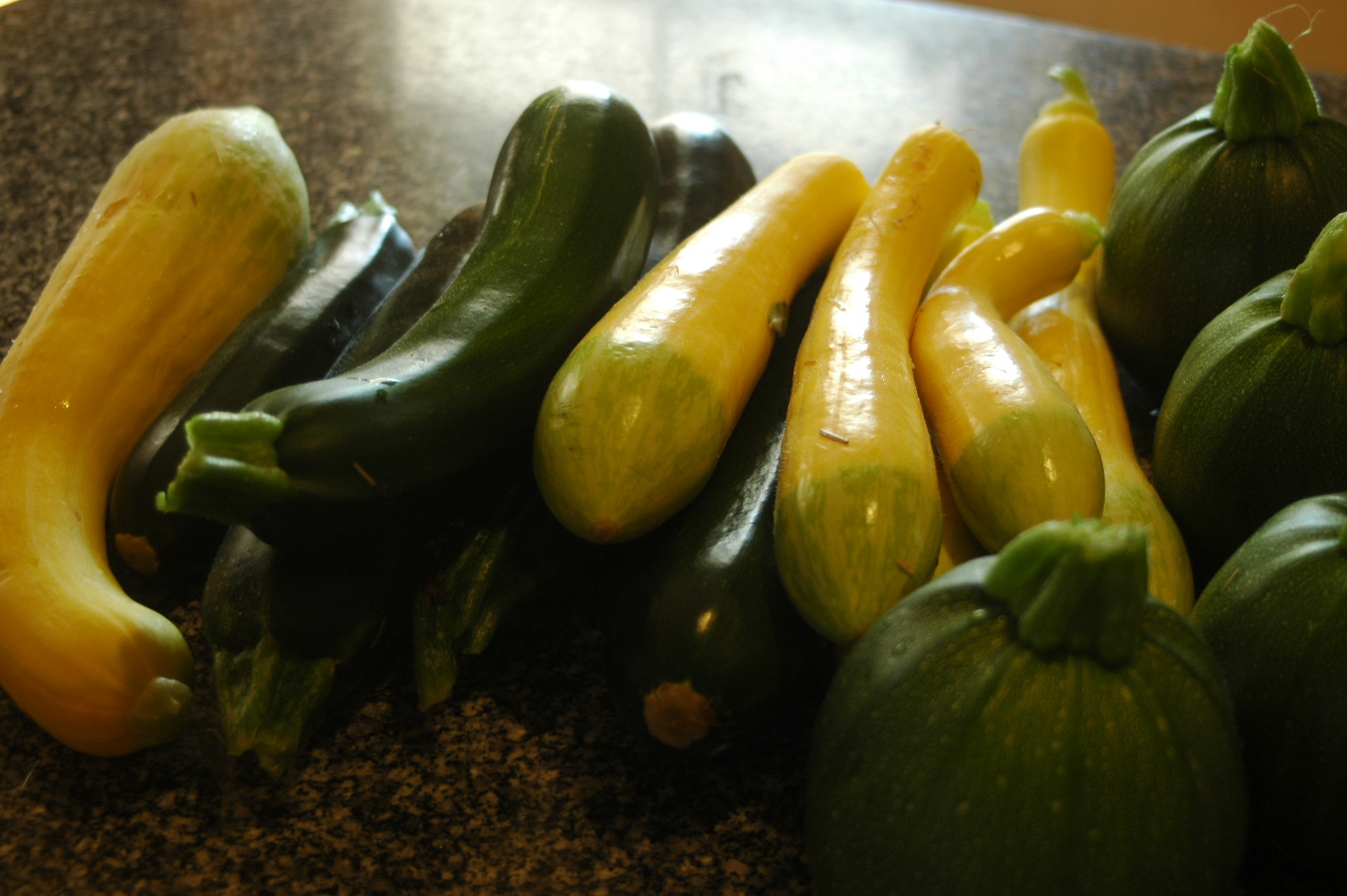
Also, I happen to love zucchini and its yellow cousins. Even now, when the faucets are full-on open, I love them. How can you not love a plant that is so supremely organized and efficient that it can crank out these handsome items 


by the bucketload when all the plants around them are gasping from drought, bolting from heat, withering in the sun? Even when a basket-busting, counter-obscuring, headache-threatening metric buttload of zucchini comes thundering into the house, my ardor remains strong. 

There are a lot of reasons for this ardor, and one them is Julie, who is the undisputed champion of so many areas of the menu that is has become pointless to catalog her numerous titles (Queen of the Bean, Empress of Elixirs, Chile Tsarina). Some broader title needs to be established for her. In one of her characteristically casual moments of generosity, she emailed me about this zucchini soup she had been whipping together. I lacked a few of the things required to reconstruct it exactly, but because I received the email while bushwhacking through a bushel of squash, I punted. 

That was two summers ago, and I've never looked back. With this handy method, it is possible to render a Code Blue Zucchini Situation like this:


into a call for quiet gloating like this:


Magical!  Here is Julie's Zucchini Soup v. 2.0, wherein you, our hero, capitalize on zucchini's confounding ability to sweat large amounts of liquid in the presence of salt, and produce for yourself a substance which can magically transform from summer refresher to winter restorative at the flick of your wrist.  Chill this down right now, and serve it as is--or with a squeeze of lemon on top and maybe a splash of olive or chile oil or a swirl of pesto or a sprinkling of fresh herbs, maybe some buttermilk or this magical yogurt --and you will swagger around feeling pretty spiffy at the end of a hot day.  Maybe you can't bear the idea of another zucchini right now.  Whatever your feelings regarding the zucchini in July, I can attest you will approach it with a twinkle in your eye come February. In the produce doldrums, a warm bowl of this with a swirl of heavy cream and some curry powder is a welcome sight on the placemat.  I freeze as much of this stuff as I can jam into the Kenmore.  Thank you, Julie.

Measurements are profoundly approximate here.  It's more of a method than a recipe.  If your zucchini payload is mostly on the young side (admittedly preferable), no special treatment is required.  If they are a little more aged than that (still well worth using), use your judgement regarding peeling tough outer bits and discarding cottony centers, and try to work a few of the juvenile specimens in with them to ensure that lovely color.


zucchini soup

For every seven or eight zucchini, one medium onion, a decent splash of olive oil and about a quarter cup of white wine (Mirin, or Japanese rice wine, makes a nice alternative), plus salt and pepper and about a teaspoon of lemon zest, very finely grated.

Dice the onion, and heat the olive oil in a large soup pot.  Saute the onion over low heat with about a teaspoon of salt, stirring as necessary, until the onion is soft and not at all brown, about five minutes.

Meanwhile,  hack the squash up by no special method into chunks of 1-2".


Add the squash to the onion along with the wine and lemon and a few twists of pepper, and give it all a good stir.  Turn the heat up, and when the zucchini pieces are nicely coated, add about a cup of water (or broth, if you feel you must, but water is fine).  Bring this to a nice boil, lower the heat to a simmer, and cover the pot.

Cook, stirring every couple minutes to ensure even heating, until the squash has given up a nice amount of liquid and is tender but still bright, like so:


Now attack the pot with your stick blender, and render yourself a nicely even purée.  Fish around determinedly for lurking chunks, and show them no mercy.  A gloriously green and supremely smooth soup is your goal.  You can do this, of course, in batches in a regular blender but take care to recall that hot liquids expand and caution must be exercised.  I tend to burn my eyeballs and make a hell of a mess when I use the regular blender for hot soup.  

Cool and deploy. 

Monday, January 23, 2012

that cosí feeling


I know about 28 words of Italian, not including words like “rigatoni” and “prosciutto.” They are very handy words, most of them, comprising survival-oriented sentences like “do you have these shoes larger, and in brown?” and “I'd like apricot, but with whipped cream, please.”


I am going to teach you seven of them today, and then move on to dinner. Apologies if you know them already.


Years ago, I was in Sicily with my parents and a school friend. We were staying in a breathtakingly beautiful old monastery, which had been converted into a decidedly not-monastic hotel. In Sicily, super delicious olive oil basically runs out of the faucets, and everything you eat is drenched in it, and your skin feels and looks fantastic, and there is no chance you could possibly need to eat when you get back to your room or before you leave it, because the food everywhere you go is so good.


Even so, for some reason I can no longer recall, my friend and I noticed that our in-room refrigerator was not working properly, and felt the need to have that corrected. I cannot imagine what it was that we needed to keep cold, but the refrigerator refused to do anything other than shield whatever was inside it from the ambient room temperature, no matter which knobs we twiddled. We called the desk, and in the fullness of time--probably the next day--they sent a man up to have a look. He looked.


“Non é freddo,” he pronounced. [“It is not cold.”]


This was not news to us, it being the reason our little summit had been assembled, but he did not tell it to us in a tone that suggested it was new information. Nor was it an apology, it should be noted, or really a diagnosis. It was clearly the first part of a statement that was about to continue.


“É fresco,” he continued. [“It’s cool.”]


He looked at us. “E basta, cosí.” [“And like that, it’s enough.”]


He left. Whatever we needed to keep cold learned to thrive at room temperature, or we learned to love it that way.


I was thinking about that little episode this morning, and then I went to yoga. This is a new activity for me, and it is succeeding as a venture because I finally found both the motivation to look after myself (pain, because I haven’t been), and the right teacher. Ilana always starts us off with a little direction, mentally speaking, and so far her hit-rate in terms of what I came through the door already thinking about is hovering around 100%.


Today she said: as you twist yourself up in pretzels for the next hour (OK, I am paraphrasing), think about giving yourself permission to see what you are doing as just enough, just the right thing to be doing to take care of your body and your needs. Don’t keep your eyes on some ever-elusive Bigger Goal, just dwell, in this moment, on the idea that you are already doing what you need to do.


Basta, cosí.


So, turning our attention from Italian refrigerators and Eastern philosophy to the stove, welcome to Super Vegetable Week. Here in the finally-snowy Northeast, it’s hard to get very excited about vegetables in the winter. They have traveled a long hard road to reach us, maybe been iced down for a good while in the process, and taken a chunk out of the wallet on their way to our plates, too. But it’s good to love your vegetables. They love you back. I was reading yet another “EAT THIS WAY OR DIE” manifesto the other day, and amid all the statements contradicting all the other credos I have encountered prior, the author said “your body owes 70% of its health to diet.” Whether there’s meat on the plate or not, the vegetables ought to play a major role. We all know that. And if you live west of the Produce Line, which bisects the nation more or less where the Long Underwear Line also hits, maybe your access is unrestricted and consequently your enthusiasm never wanes.


Super Vegetable Week is for the rest of us. Kind of like Date Night for your relationship with the Food Pyramid.


My default position on squash is to split it, gut it, and roast it face down, then butter it. It gets eaten, and it is tasty, if not especially exciting. I read a recipe this week that went in a whole new direction, but had too many steps to make use of in a hurry and used spices that did not appeal. So I punted, combining the idea and the amount of time I had to spend on it to come up with this. My friend Laura recently reported, re: a recipe that asked her to toast cumin seeds, that it caused her to roll her eyes at the extra work--but when she gave in and spent the extra three minutes doing it, the aroma made her "understand why the entire age of exploration was fueled by an interest in spice-trading." Good payoff in terms of time invested, I reckon. But toasting the spices, or not, is your call. Tasty regardless and, of course, either way is the path of enlightened self-care.


roasted squash slices


1 medium to large butternut squash

1 t whole cumin seed

a pinch of whole fennel seed

½ t nigella seed, also known as kalonji or black onion, or substitute whole coriander seed (you can also use both)

a pinch of red pepper flakes, if you want a little heat

a pinch of coarse salt

1T vegetable oil


optionally, a lime (and a kaffir lime would do well, too)


Preheat the oven to 400, and line a large baking sheet with parchment paper. Chop the neck of the squash from the bulb, then put each of these sections down on their cut side and split lengthwise. Scrape the seeds, and cut the squash in horizontal slices not quite ½ “ thick. Plop them in a medium bowl that leaves room for tossing.


Optionally, put a small skillet over medium heat and when it is heated up, drop the spices in and toast for less than a minute, until one or two seeds pop and the fragrance rises. Dump them into a small mortar or into whatever you will use to very coarsely grind them if you don’t have a mortar. They should be cracked, but not powdered. In a mortar, that took me about 40 seconds. Dream of sailing to Madagascar, if you like.


Pour the crushed spices (toasted or not) and the oil and the salt over the squash slices and toss to coat. Spread in a single layer on the prepared pan and roast for about 15-20 minutes, until the slices soften and brown a little. Squeeze a little lime over them, or not, before you serve them at whatever temperature suits you.


A note about the Nigella seed: it is generally not hard to find in the Indian section of your Gourmet Shoppe, or buy it online here or here, among other places. If you are ordering from Kalustyan's, you may as well add a few ounces of the spice known temptingly as 'grains of paradise' to your order, because you can put it in your peppermill instead of black pepper and be very happy you did so.